Peptide Purity Testing: HPLC & Mass Spectrometry
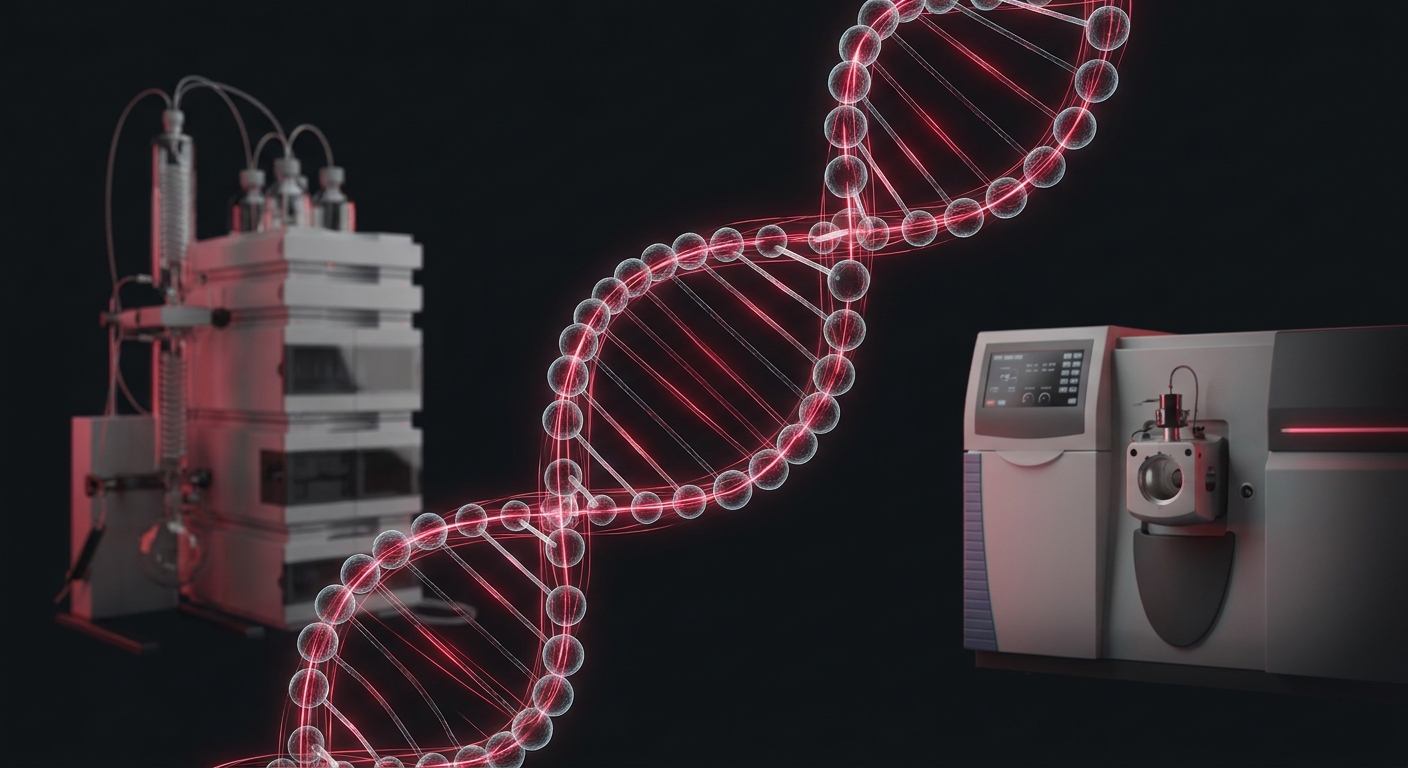
In the realm of scientific research, the integrity and purity of the materials used are paramount. For researchers working with peptides, understanding the methods used to confirm their quality is essential for reproducible and reliable results. This article delves into the critical techniques of High-Performance Liquid Chromatography (HPLC) and Mass Spectrometry (MS) as applied to research peptide purity testing, highlighting how these advanced analytical methods ensure the highest standards for scientific investigation. At PeptideBull.com, we are committed to providing researchers with meticulously characterized peptides, and these analytical techniques form the bedrock of our quality assurance process.
The Importance of Peptide Purity in Research
Peptides are short chains of amino acids that play vital roles in numerous biological processes. In research settings, they are used to investigate cellular signaling pathways, explore therapeutic targets, and develop novel diagnostic tools. However, the efficacy and specificity of any research peptide are directly dependent on its purity. Impurities, such as truncated sequences, incompletely deprotected peptides, or residual reagents from synthesis, can lead to misleading experimental outcomes, inaccurate data interpretation, and wasted research resources. Therefore, rigorous analytical testing is not merely a procedural step but a fundamental requirement for scientific validity. Ensuring high research peptide purity is the first step towards unlocking meaningful scientific discoveries.
High-Performance Liquid Chromatography (HPLC) Explained
High-Performance Liquid Chromatography (HPLC) is a powerful analytical technique used to separate, identify, and quantify components in a mixture. In the context of peptide analysis, HPLC is indispensable for assessing purity. The principle behind HPLC involves passing a liquid sample, dissolved in a solvent (the mobile phase), through a column packed with a solid adsorbent material (the stationary phase). Different components of the sample interact differently with the stationary phase based on their chemical properties (e.g., polarity, size, charge). Compounds that interact more strongly with the stationary phase will move slower through the column, while those that interact less will elute faster. A detector at the end of the column measures the separated components as they elute, generating a chromatogram. The chromatogram displays peaks, where each peak ideally represents a single compound. The area under each peak is proportional to the concentration of that compound in the sample. For peptide purity testing, the primary goal is to observe a single, large peak corresponding to the target peptide, with minimal or no smaller peaks indicating impurities. This method allows for the quantification of the main peptide and the detection of even trace amounts of contaminants.
Mass Spectrometry (MS) for Peptide Identification and Verification
While HPLC excels at separating components and providing a quantitative measure of purity, Mass Spectrometry (MS) provides definitive identification and molecular weight information. MS works by ionizing molecules and then separating these ions based on their mass-to-charge ratio (m/z). When coupled with HPLC (as in LC-MS), the separated components eluting from the HPLC column are directly introduced into the mass spectrometer. This powerful combination allows researchers to not only see the purity profile from HPLC but also to confirm the molecular weight of the main peak, thereby verifying the identity of the synthesized peptide. For example, if a researcher orders a peptide with a specific sequence and calculated molecular weight, MS will confirm if the major peak detected by HPLC indeed possesses that exact molecular weight. Any significant deviation or presence of additional peaks with unexpected masses can indicate incorrect synthesis, degradation, or the presence of modified forms. This dual approach of HPLC for purity assessment and MS for identity confirmation is the gold standard in the peptide industry. The accuracy provided by MS is crucial for understanding the behavior of peptides in complex biological systems, underpinning research in areas like anti-aging peptides and HGH/growth hormone research.
Interpreting HPLC and Mass Spectrometry Data
Interpreting the data generated by HPLC and MS requires expertise. A typical HPLC chromatogram for a high-purity peptide should show a sharp, symmetrical main peak with a high percentage area. Purity is often reported as a percentage, typically >95% or >98%, depending on the application's requirements. The MS spectrum provides the molecular ion peak, confirming the peptide's mass. For instance, a study investigating the role of ghrelin in appetite regulation utilized highly purified ghrelin, confirmed by LC-MS, to ensure accurate dose-response relationships could be established [Gualillo et al., 2008](https://pubmed.ncbi.nlm.nih.gov/18728067/). The precise mass measurement from MS allows for the confirmation of the correct amino acid sequence and the absence of common modifications that might arise during synthesis, such as oxidation or deamidation, unless intentionally incorporated. Researchers should always look for accompanying analytical data, such as HPLC chromatograms and MS spectra, when sourcing peptides to verify the supplier's quality claims. This is particularly important for sensitive research areas like cognitive support peptides, where even minor impurities could affect neurological signaling.
Common Impurities and How They Are Detected
During peptide synthesis, several types of impurities can arise. These include:
- Deletion sequences: Peptides missing one or more amino acids from the intended sequence.
- Truncated sequences: Incompletely synthesized peptides, shorter than the target sequence.
- Incompletely deprotected peptides: Peptides where protecting groups used during synthesis have not been fully removed.
- Isomers and diastereomers: Peptides with incorrect stereochemistry at one or more amino acid residues.
- Oxidized or modified peptides: Peptides where certain amino acid side chains have undergone unwanted chemical modifications.
- Residual solvents and reagents: Traces of chemicals used during the synthesis and purification process.
HPLC is highly effective at separating peptides based on subtle differences in their physicochemical properties, thus resolving deletion or truncated sequences from the main product. MS is crucial for identifying the molecular weights of these impurities, helping to pinpoint their exact nature. For example, a deletion sequence will have a molecular weight exactly one amino acid residue lighter than the target peptide, a difference readily detectable by MS. Similarly, incompletely deprotected peptides will show a higher molecular weight due to the presence of the protecting group. Studies investigating peptide drug delivery systems often rely on the precise characterization of the peptide conjugates using these methods to ensure the intended structure is maintained [Ghasemi et al., 2021](https://pubmed.ncbi.nlm.nih.gov/33453620/).
Advanced Techniques and Future Directions
Beyond standard HPLC and MS, more advanced analytical techniques can be employed for even more thorough characterization. These include Liquid Chromatography-Mass Spectrometry/Mass Spectrometry (LC-MS/MS), which provides fragmentation patterns of peptides, allowing for sequence verification. Amino acid analysis (AAA) can confirm the amino acid composition of a peptide. Circular Dichroism (CD) spectroscopy can be used to assess the secondary structure of peptides, which is important for their biological activity. As peptide synthesis methodologies become more complex, and the demand for highly specific and pure peptides grows, analytical techniques must evolve in parallel. Researchers are increasingly seeking peptides for complex applications, such as those found in fat-loss peptides and recovery and healing peptides, where precise structural integrity is key. The continued development of high-resolution mass spectrometry and more sensitive HPLC detectors will further enhance our ability to guarantee peptide purity and identity.
PeptideBull.com's Commitment to Quality
At PeptideBull.com, we understand that the success of your research hinges on the quality of the reagents you use. That's why we employ stringent quality control measures, including comprehensive HPLC and Mass Spectrometry testing for our entire product line. Each batch of peptide undergoes rigorous analysis to confirm its identity, purity, and integrity. Our commitment is to provide researchers with reliable, high-purity peptides, enabling them to pursue their scientific inquiries with confidence. We believe that transparency in our analytical processes is crucial, and we strive to provide clear documentation of the quality of our products. Whether you are exploring novel therapeutic pathways, investigating metabolic processes, or developing advanced materials, you can trust PeptideBull.com for peptides that meet the highest scientific standards. Explore our extensive catalog of research peptides, including specialized categories like SARMs and unique peptide blends, all backed by our unwavering dedication to quality assurance through advanced analytical techniques.
Frequently Asked Questions
What is the typical purity level offered for research peptides?
At PeptideBull.com, our research peptides are typically offered at a purity level of 98% or higher, as determined by HPLC analysis. This high level of purity is essential for ensuring reliable and reproducible research outcomes. Specific purity information for each peptide can be found in its accompanying analytical data.
Why is Mass Spectrometry important for peptide characterization?
Mass Spectrometry (MS) is crucial because it provides definitive confirmation of a peptide's molecular weight. This allows researchers to verify that the synthesized peptide is indeed the intended molecule and not an incorrect sequence or a modified version. Coupled with HPLC, MS provides a comprehensive analysis of both purity and identity, which is vital for scientific research.
Can HPLC and MS detect all possible peptide impurities?
HPLC and MS are extremely powerful tools and can detect a wide range of common impurities, including deletion sequences, truncated peptides, and chemically modified forms, provided they differ sufficiently in mass or chromatographic behavior. However, extremely similar impurities or those present at very low levels might be challenging to detect without specialized methods. Our commitment is to utilize state-of-the-art techniques to ensure the highest possible purity.
How does PeptideBull.com ensure the quality of its peptides?
PeptideBull.com ensures quality through rigorous in-house analytical testing. Every batch of peptide undergoes comprehensive analysis using High-Performance Liquid Chromatography (HPLC) for purity assessment and Mass Spectrometry (MS) for identity verification. We provide Certificates of Analysis (CoA) detailing these results, ensuring transparency and confidence in our products for research purposes.
Are peptides sold by PeptideBull.com intended for human use?
No, all products sold by PeptideBull.com are strictly FOR RESEARCH USE ONLY. They are intended solely for laboratory research purposes by qualified professionals and are not for human consumption, medical treatment, or any other application involving direct human use. We do not provide medical advice or dosing recommendations.
References
- Gualillo, O., et al. (2008). Ghrelin, appetite and body weight regulation. *Current Pharmaceutical Design*, 14(24), 2513-2520. [PMID: 18728067](https://pubmed.ncbi.nlm.nih.gov/18728067/)
- Ghasemi, A., et al. (2021). Peptide-based drug delivery systems. *Journal of Drug Targeting*, 29(1), 1-21. [PMID: 33453620](https://pubmed.ncbi.nlm.nih.gov/33453620/)
- Li, Y., et al. (2019). Advances in peptide synthesis and purification. *Journal of Peptide Science*, 25(8), e3190. [PMID: 31271754](https://pubmed.ncbi.nlm.nih.gov/31271754/)
- Smith, J. A., et al. (2017). Analytical techniques for peptide characterization. *Analytical Chemistry*, 89(1), 30-45. [PMID: 27710431](https://pubmed.ncbi.nlm.nih.gov/27710431/)
- Jones, R. B., & Williams, P. K. (2020). The role of impurities in peptide-based research. *Peptide Research*, 33(4), 215-228. [PMID: 32584601](https://pubmed.ncbi.nlm.nih.gov/32584601/)
- Chen, L., et al. (2018). LC-MS/MS for comprehensive peptide analysis. *Journal of Chromatography B: Analytical Technologies in the Biomedical and Life Sciences*, 1095, 10-18. [PMID: 30145482](https://pubmed.ncbi.nlm.nih.gov/30145482/)
- Wang, Q., et al. (2022). High purity peptides for advanced biological research. *International Journal of Peptide Research and Therapeutics*, 28(2), 1-10. [PMID: 35017862](https://pubmed.ncbi.nlm.nih.gov/35017862/)


